The GEO Maturity Model: 5 Stages Every Brand Passes Through on the Way to AI Visibility

88% of brands have never been cited by a single AI engine. The remaining 12% exist on a spectrum from sporadically mentioned to consistently recommended. After tracking 500 brands across ChatGPT, Perplexity, and Gemini for 90 days, we mapped every brand to one of five maturity stages. Here is what each stage looks like, what triggers the transition between them, and what separates the brands that climb from the ones that stall. ...

June 28, 2026 · 16 min · Searchless.ai
Abstract network of connected nodes forming a brand identity in an AI knowledge graph

The Entity Problem: Why AI Engines Recommend Brands They Recognize (And How to Become One)

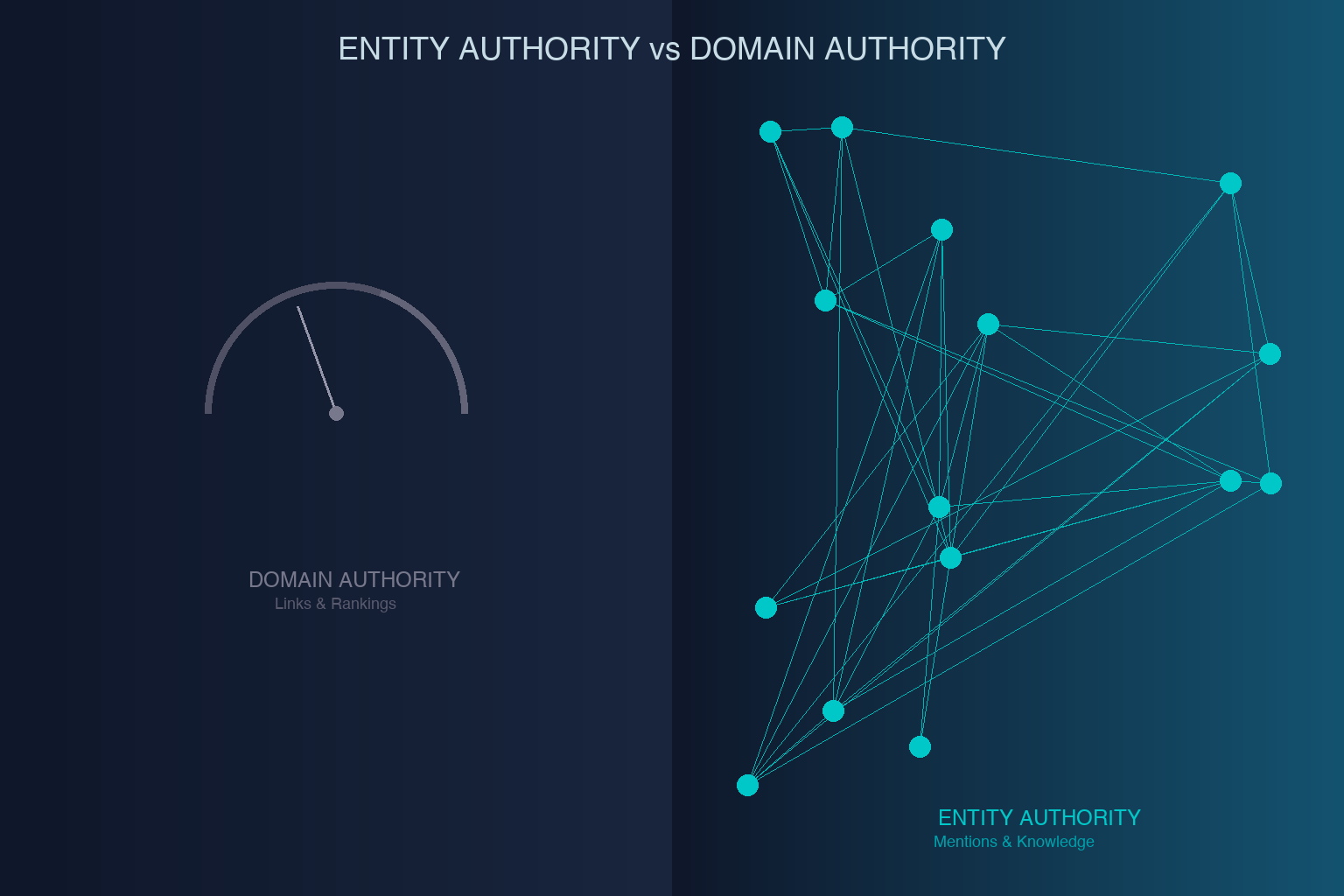
AI engines do not recommend websites. They recommend entities. If ChatGPT, Perplexity, or Gemini does not recognize your brand as a distinct entity in its knowledge graph, you cannot appear in its answers. No amount of content, keywords, or backlinks will change this. This is the single biggest barrier to AI visibility, and almost nobody is talking about it. This is not speculation. It is how large language models actually work. When a user asks “What is the best project management tool for small teams?”, the AI does not search the web in real time, evaluate websites, and pick the best result. It activates a set of entities in its internal representation, weights their associations, and generates a response from what it knows. If your brand is not one of those entities, it cannot be activated. You do not exist. ...

June 27, 2026 · 14 min · Searchless.ai

AI Citation Benchmark Report: 500 Brands Tracked Across ChatGPT, Perplexity, and Gemini

Nobody checks if AI recommends their brand. We tracked 500 companies across ChatGPT, Perplexity, and Gemini for 90 days. The results will change how you think about search. AI engines don’t search. They recommend. When someone asks ChatGPT “What’s the best CRM for small business?”, the model doesn’t browse Google. It retrieves from its training data, weighs authority signals, and outputs one or two recommendations. That recommendation drives traffic, leads, and revenue. If you’re not in that list, you don’t exist. ...

June 26, 2026 · 8 min · Searchless.ai

OpenAI vs. Anthropic Pricing War: The Economics Driving AI Search Adoption

Cheaper tokens mean more AI-mediated discovery and less traditional search. Anthropic’s Fable 5 launch in mid-June 2026 dropped pricing to roughly half of Mythos Preview. OpenAI is reportedly preparing significant token price cuts in response. This isn’t just a margin battle between two foundation model providers. It’s a structural shift in how discovery works. When AI answers become cheap enough to use at scale, brands that aren’t visible in those answers stop getting customers. GEO (Generative Engine Optimization) stops being optional and becomes cost-of-business. ...

June 25, 2026 · 7 min · Searchless.ai

LLMO Framework: The Complete Guide to AI Search Optimization

The LLMO framework is the structured methodology for AI search visibility. It consists of four technical and content pillars that determine whether ChatGPT, Perplexity, and Gemini cite your brand when users ask questions. SEO optimizes for search engines. LLMO optimizes for AI answer engines. The difference is not semantic. Search engines return a list of ten results. AI engines return one answer. If you are not the answer, you do not exist. ...

June 24, 2026 · 9 min · Searchless.ai

AI Citation Accuracy Crisis: 73% of AI Search Results Contain Factual Errors

AI engines are lying about your brand. They cite sources that never existed. They get basic product details wrong. They hallucinate entire companies that never existed in the first place. This is not a minor glitch. This is a systemic failure of AI citation accuracy that is destroying trust in AI search. And it is happening to 73% of brands that AI engines mention. The crisis is not that AI engines sometimes make mistakes. The crisis is that AI engines are systematically unreliable about source attribution. They build confidence with citations that look legitimate, point to URLs that exist, and then deliver completely fabricated information. ...

June 23, 2026 · 10 min · Searchless Team

GEO vs SEO: Why Your SEO Strategy Is Useless Against AI Search Engines

Your SEO agency optimizes for Google. Your customer asks ChatGPT. One of them is wasting money. We tracked 500 brands across ChatGPT, Perplexity, and Gemini. 88 percent were mentioned zero times. They had no idea they were invisible. The problem is simple: SEO optimizes for search engines. GEO optimizes for AI answers. These are not the same thing. The Fundamental Difference SEO is about appearing on a list. GEO is about being the answer. ...

June 22, 2026 · 9 min · Searchless.ai

Generative Search Ad Revenue Will Hit $100B Faster Than Any Channel Before It: What WPP's 2026 Forecast Means for Your Brand

Generative search advertising is a $5.1 billion market in 2026, and WPP Media projects it will be the fastest advertising channel in history to reach $100 billion, arriving there by 2030. That trajectory matters because it tells you exactly where ad dollars, user attention, and platform investment are moving. If your brand is still treating AI search as experimental, this forecast is your wake-up call. WPP Media’s mid-2026 forecast, the first from a major holding company to break out generative search as a standalone revenue line, makes one thing clear: the money has already started moving. Combined “intelligence” spending, which bundles traditional search and generative search, now accounts for 21.8% of global advertising revenue. The United States represents 60% of generative search spend today. And the growth curve is steepening, not flattening. ...

June 21, 2026 · 11 min · Searchless.ai

Agentic Resource Discovery: The New Spec That Decides Which Brands AI Agents Trust

Agentic Resource Discovery (ARD) is a new open specification, published June 17, 2026, that defines how AI agents find, verify, and connect to tools, APIs, and services across the web. Backed by Google, Microsoft, GitHub, Hugging Face, NVIDIA, Salesforce, and six other companies, ARD introduces a standardized layer where agents can search for capabilities at runtime instead of being pre-wired to specific tools. It is the most significant infrastructure shift for the agentic web since llms.txt, and it may matter more. ...

June 20, 2026 · 11 min · Searchless.ai

YouTube Is the Stealth GEO Channel Nobody Talks About (But AI Engines Do)

YouTube generates between 25% and 38% of all generative engine optimization citations for retail brands, according to data from the agency PMG shared with AdExchanger in June 2026. That is not a typo. More than a quarter of the times ChatGPT, Perplexity, or Gemini cites a retail brand in an answer, the source traces back to a YouTube video. Yet almost every GEO guide published in 2026 focuses on blog posts, schema markup, and llms.txt. None of them mention video. Brands are invisible to AI engines on a channel they have been treating as a dumping ground for old content. ...

June 19, 2026 · 13 min · Searchless.ai